Understanding Winter Energy Cost Spikes
- 🔥 Heating systems work overtime when outdoor temperatures drop, with furnaces and heat pumps running constantly during cold snaps
- 💡 Shorter daylight hours increase lighting usage throughout your home
- 🏠 Holiday gatherings and indoor time drive up electricity consumption for cooking, entertainment, and household activities
- ⛽ Natural gas prices peak during heating season, affecting both gas heating and electricity rates
Thermostat Strategies That Save Money
- 🏠 68°F when home and awake — comfortable baseline temperature
- 😴 60-65°F during sleep — your body naturally needs less warmth
- 🚗 Lower during away periods — no need to heat an empty house
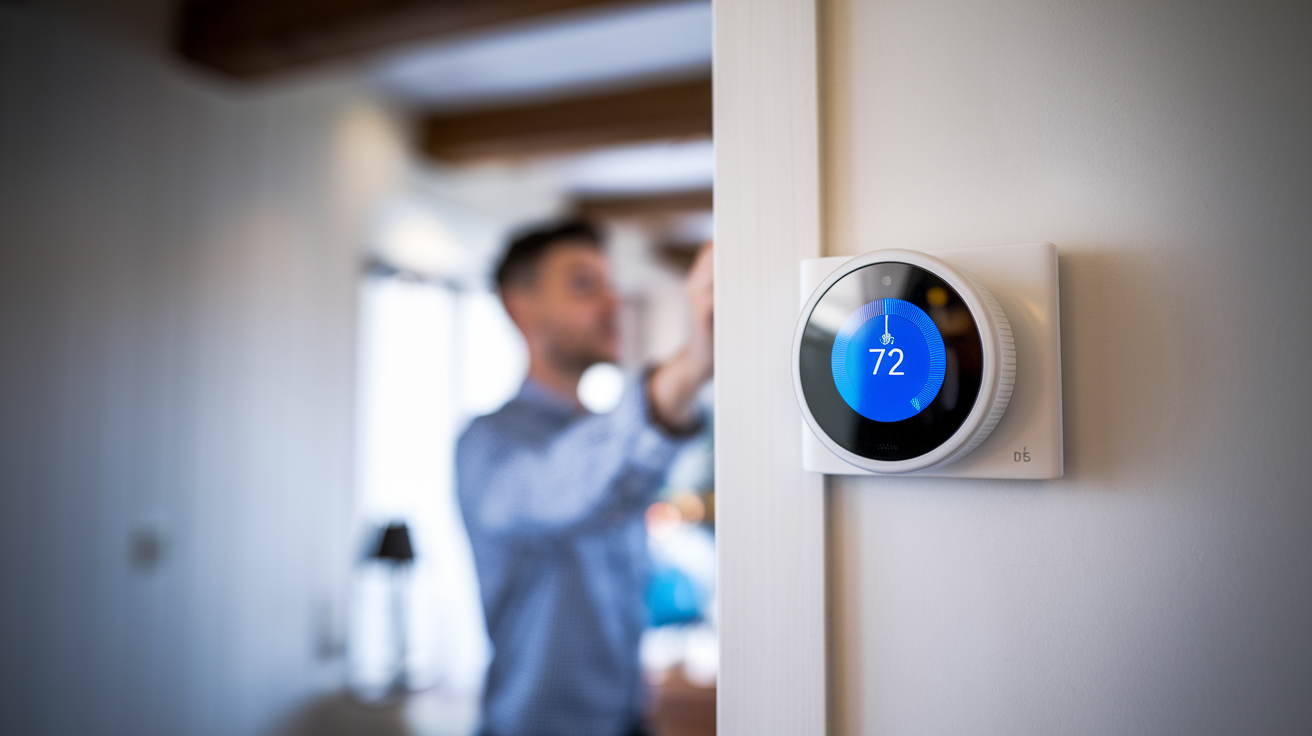
- ⏰ Programmable thermostats — automate adjustments, no daily manual changes needed
- 📱 Smart thermostats — learn your schedule and allow remote smartphone control
Sealing Air Leaks to Stop Heat Loss
- 🚪 Weatherstripping — costs under $50, saves 10-20% on heating costs
- 🔧 Caulk application — seal around window frames and where walls meet floors
- 🔌 Outlet gaskets — install behind switch plates on exterior walls
- 📏 Door sweeps — install if daylight is visible at the bottom of exterior doors
- 🔍 Around pipes, vents, and wires entering your home
- 🪟 Window frames and door frames
- 🏠 Where walls meet floors and ceilings
Improving Insulation for Long-Term Savings
- 🔺 Heat rises and escapes through poorly insulated roofs
- 📊 DOE recommends R-38 to R-60 for Ohio, Pennsylvania, and Massachusetts climates
- 🔍 Quick check: If floor joists are visible in your attic, you likely need more insulation
- 🧱 Wall insulation — contributes to comfort but requires professional assessment
- 🏠 Floor insulation — especially important over unheated spaces like crawlspaces
Maintaining Heating System Efficiency
- 🔧 Replace furnace filters monthly — clogged filters restrict airflow and force systems to work harder
- 🌡️ Bleed radiators in hot water systems to remove air pockets reducing heat output
- ❄️ Keep heat pump units clear — remove snow and ice from outdoor units
- 📅 Schedule annual tune-ups — ensures proper operation and clean components
- 🔍 Catch problems early — before they become costly repairs
Using Sunlight and Window Coverings Strategically
- ☀️ Open curtains on sunny days — capture free solar heat through south-facing windows
- 🌅 Close at sunset — add insulation value and retain accumulated warmth
- 🪟 Keep non-sunny windows covered — they lose more heat than they gain
- 🛡️ Thermal curtains — insulating backing reduces heat loss by up to 25% vs standard curtains
- 💨 Honeycomb blinds — air pockets provide additional insulation
Zone Heating and Space Heater Safety
- 🚪 Close vents and doors in unused rooms to concentrate heat where needed
- 🔥 Use space heaters strategically — warm specific areas while keeping central thermostat lower
- 📊 Calculate cost comparison — verify space heater electricity costs vs central heating for your usage
- ✅ Choose heaters with auto shut-off — essential safety feature
- ⚠️ Keep away from flammables — maintain 3-foot clearance
- 🚫 Never leave unattended — turn off when sleeping or leaving the room
Daily Habits That Lower Winter Energy Bills
- 🧥 Dress warmly indoors — sweaters and slippers beat cranking up the thermostat
- 🛏️ Use extra blankets — stay comfortable with lower overnight temperatures
- 🍳 Cook with the oven — adds warmth to your kitchen while preparing food
- 🧺 Run dryers in evening — capture waste heat while you're home
- 🚿 Open bathroom doors after showering — distribute warm, humid air throughout your home
- ⏱️ Take shorter showers — water heating is a significant winter cost
Frequently Asked Questions
What temperature should I set my thermostat in winter?
The Department of Energy recommends 68 degrees Fahrenheit when home and awake, dropping to 60 to 65 degrees during sleep and away periods. Each degree of reduction saves approximately 1% to 3% on heating costs. Find the lowest comfortable setting for your household and use programmable features to automate adjustments.
Do space heaters save money compared to central heating?
Space heaters can save money if you're heating only a small area while keeping central heat very low. However, electric space heaters cost more per unit of heat than gas furnaces in most areas. Calculate your specific costs based on local electricity and gas rates. Space heaters work best for supplementing central heat in frequently used rooms.
How much do air leaks cost me in winter?
Air leaks can account for 25% to 40% of heating and cooling costs in a typical home. Sealing obvious gaps around windows, doors, and other openings typically costs under $100 in materials but can save $100 to $300 or more annually depending on your home's condition and local energy prices.
Is it better to keep the thermostat constant or adjust it?
Adjusting your thermostat lower during sleep and away periods saves more money than maintaining a constant temperature. Modern heating systems efficiently warm cold spaces, and the energy saved during setback periods exceeds the extra energy needed for recovery. Programmable thermostats make these adjustments automatic and convenient.
Should I close vents in unused rooms?
Partially closing vents in unused rooms can help concentrate heat in occupied areas, but completely closing many vents can create pressure imbalances that reduce system efficiency or cause damage. Close no more than 20% to 30% of vents, and ensure your system was designed for zoning if closing vents significantly. Keep doors to unused rooms closed for best results.
About the author
Consumer Advocate
Brad moved from California to Texas in 2009 and got confused by electricity shopping—something that didn't exist where he came from. That confusion led him to build ComparePower.com. At ElectricRates.org, he's applying the same approach to Ohio, Pennsylvania, and Massachusetts.
Topics covered
Sources & References
- DOE - Heating & Cooling (U.S. Department of Energy): "DOE provides comprehensive guidance on winter heating efficiency and thermostat settings"Accessed Jan 2025
- ENERGY STAR - Home Sealing (U.S. Environmental Protection Agency): "ENERGY STAR provides home sealing and insulation recommendations for energy efficiency"Accessed Jan 2025
Last updated: December 10, 2025